
Introduction
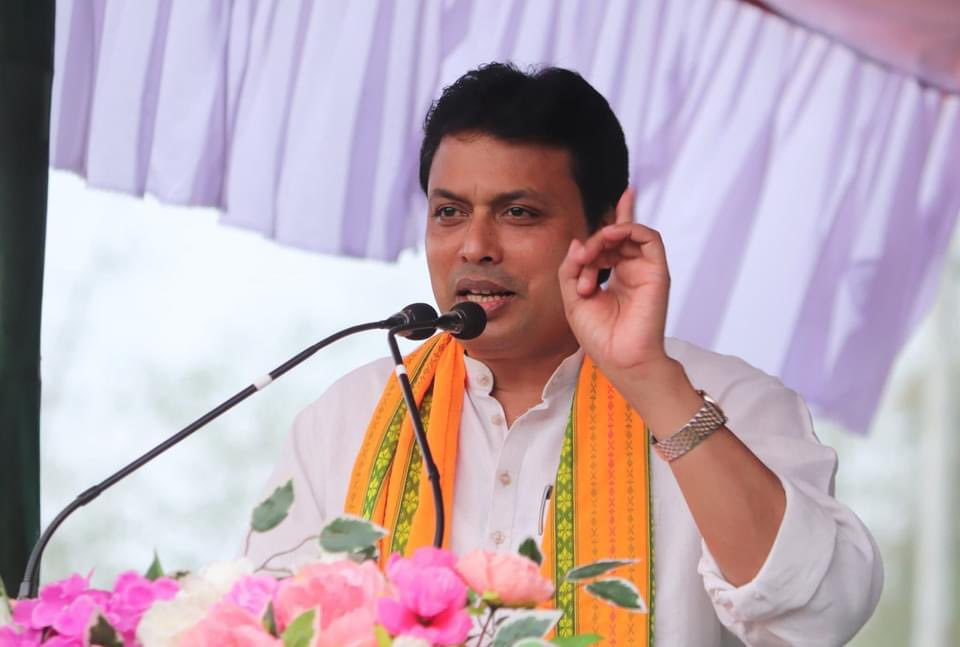
Biplab Kumar Deb stands as a transformative figure in Indian politics, particularly recognized as the architect of the Bharatiya Janata Party’s (BJP) historic expansion into the North-East. His leadership marked a paradigm shift in Tripura’s political landscape, ending decades of alternative governance and ushering in an era focused on nationalistic governance and ideological commitment. As the first BJP Chief Minister of the state and now a prominent Member of Parliament, Deb has been central to bridging the gap between regional aspirations and federal development policies, solidifying his stature as one of the most prominent faces of the BJP in the region.
Early Life and Education
Born on November 25, 1971, in Udaipur, Tripura, Biplab Kumar Deb’s journey is rooted in the very soil he would later govern. He completed his initial schooling in his hometown of Udaipur in 1987. Pursuing higher education within his home state, he attended Tripura University in Agartala, where he earned his Bachelor of Arts (B.A.) in 1994. Demonstrating a continued commitment to academic excellence, he furthered his studies at the same institution, completing a Master of Arts (M.A.) degree in 1999. This local educational foundation provided him with a deep understanding of the socio-economic challenges and cultural nuances of Tripura.
Political Ascent
Deb’s formal political trajectory in Tripura gained significant momentum in 2016 when he was appointed the BJP State Unit President. Under his organizational leadership, the party achieved a landmark victory in 2018, where he won his assembly seat with 59.89% of the vote. He served as the Chief Minister of Tripura from 2018 to 2022, a tenure characterized by strategic transformation and infrastructural focus. Following his time in the state executive, he transitioned to national roles, serving as a Member of the Rajya Sabha starting in 2022. In 2024, he further solidified his mandate by being elected to the 18th Lok Sabha from the Tripura West constituency with a resounding 72.85% of the vote, securing 8,81,341 votes.
Governance Style and Key Initiatives
Deb’s governance style is anchored in administrative reform and high-level engagement. He has frequently advocated for rural development and regional integration, aiming to integrate Tripura more deeply into the national developmental framework. His key initiatives have focused on infrastructural modernization, promoting youth employment schemes, and improving the efficiency of public administration. Beyond state borders, he has represented India’s developmental vision on the international stage, participating in high-level forums such as the G-20 Parliamentary Summits. His approach balances state-level administrative experience with national-level legislative responsibilities.
Vision for Tripura
Central to Biplab Kumar Deb’s political philosophy is the vision of positioning Tripura as a “model state” in the Northeast. This vision encompasses comprehensive infrastructural overhauls, the promotion of employment opportunities for the youth, and the implementation of robust administrative reforms to enhance governance. By focusing on these pillars, he aims to ensure that Tripura serves as a blueprint for growth and modernization in the region, bridging regional aspirations with federal policies to drive sustainable development.
Conclusion
In conclusion, Biplab Kumar Deb’s impact on Tripura and the broader North-Eastern political landscape is profound. From his early days as an organizer to his role as a Chief Minister and now a Member of Parliament, his journey reflects a tireless dedication to public service and a strategic vision for a modern nation. His legacy is defined by his success in shifting political dynamics and his role as an architect of modern governance. As he continues his work in the Lok Sabha, his influence remains a defining force in the quest for a prosperous and integrated Tripura.