
Introduction
In the intricate tapestry of Indian politics, few figures manage to embody the historical grandeur of a bygone era while navigating the rigorous demands of 21st-century democracy as seamlessly as Kriti Devi Debbarman. A prominent political figure in the northeastern state of Tripura, her emergence on the national stage marks a significant shift in regional dynamics. Debbarman represents a unique intersection of heritage and horizontal mobilization, bridging the erstwhile royal legacy of the Tripura princely state—governed for centuries by the Manikya dynasty—with contemporary democratic aspirations. Her recent role in the 2024 Lok Sabha elections served as a pivotal moment, not only for her career but for the broader political narrative of the region, signaling a reconciliation between traditional reverence and modern electoral mandate.
Early Life and Royal Heritage
Born into the illustrious Manikya dynasty, Kriti Devi Debbarman grew up amidst the cultural and historical echoes of Ujjayanta Palace. The Manikya kings were historically known for their patronization of the arts, literature, and the integration of diverse communities within their realm. This upbringing was not merely one of privilege but of profound responsibility. The ethos of the royal family emphasized cultural preservation as a cornerstone of identity, a worldview that deeply influenced Debbarman’s perspective on governance. Her educational background, characterized by a rigorous academic foundation, provided her with the intellectual tools to translate this heritage into a public-facing role. Early life influences, particularly the stories of her ancestors’ commitment to community service and tribal welfare, prepared her to act as a custodian of the people’s trust in a democratic framework.
Political Trajectory
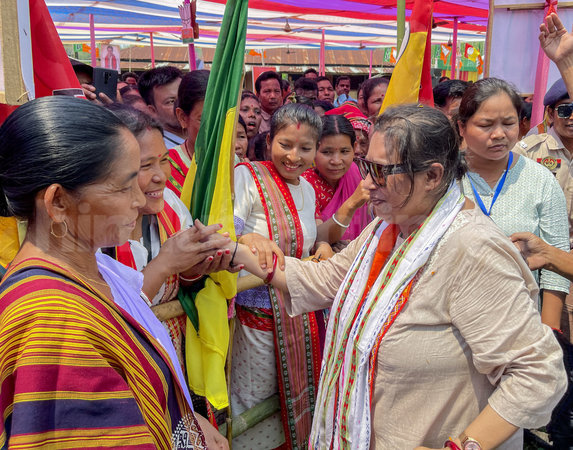
Debbarman’s entry into active politics was catalyzed by the rising tide of indigenous regionalism in Tripura. She aligned herself with the TIPRA Motha party (The Indigenous Progressive Regional Alliance), led by her brother, Pradyot Bikram Manikya Deb Barman. The party’s rise disrupted the long-standing duopoly of the Left Front and the BJP by focusing on the ‘Greater Tipraland’ sentiment. Her candidacy for the Tripura East (ST) constituency in the 2024 elections was a strategic masterstroke. Navigating a complex demographic landscape that includes both indigenous tribal groups and a significant non-tribal population, she successfully leveraged her personal brand as a ‘Maharani’ alongside the party’s ideological platform. Her victory was resounding, securing a massive mandate that underscored her ability to unify disparate groups. She faced challenges ranging from administrative hurdles to deep-seated political rivalries, yet her campaign resonated with a population seeking a voice that understood their ancestral roots as well as their modern grievances.
Vision and Governance
At the heart of Debbarman’s vision is a commitment to the holistic development of Tripura, with a sharp focus on the marginalized indigenous population. She has been a fierce advocate for the constitutional rights of the Tripuri people, emphasizing that cultural identity must be protected through legal and administrative safeguards. Her stance on regional aspirations is one of balanced pragmatism; while she champions the recognition of tribal rights and the empowerment of the Tripura Tribal Areas Autonomous District Council (TTAADC), she remains committed to national integration. She envisions a Tripura where regional pride fuels national growth. Her governance priorities include a massive overhaul of education and healthcare services in remote tribal areas, coupled with the development of rural infrastructure. By focusing on the TADC areas, she aims to bridge the development gap that has historically left the hills lagging behind the plains.
Bridging Tradition and Modernity
One of the most compelling aspects of Debbarman’s leadership is her ability to use heritage as a conduit for modern democratic rights. In her public addresses, she often invokes the historical glory of Tripura to instill confidence in the youth, while simultaneously discussing tech-savvy solutions for unemployment and digital connectivity. Her oratory style is inclusive, relating as easily to the village elders who remember the days of the monarchy as to the younger generation active on social media. She represents a new breed of Northeastern leaders who are articulate, deeply rooted in local identity, and capable of holding their own in national debates. This dual identity—as a royal and a representative—allows her to act as a stabilizing force in a region often prone to ethnic tensions.
Impact on National Discourse
Her presence in the Lok Sabha significantly elevates the representation of Northeastern tribal issues. In the national capital, she serves as a vital bridge between the grassroots realities of the TTAADC and the Union government’s policy-making apparatus. By articulating regional grievances with sophistication and evidence-based arguments, she ensures that the unique challenges of Tripura—from land rights to the preservation of the Kokborok language—are not sidelined. Her ability to navigate the corridors of power in New Delhi while maintaining her status as a local icon gives her a unique advantage in lobbying for central funds and policy interventions that favor the Northeast.
Conclusion
Kriti Devi Debbarman’s impact on Tripura’s political landscape is profound, marking the evolution of regional politics from mere identity-based mobilization to a more sophisticated model of democratic engagement. Her leadership signifies a new chapter where heritage is not an anchor to the past but a sail for the future. As she continues her journey in the Lok Sabha, her career promises to be a blueprint for how traditional authority can be successfully democratized. Ultimately, her role in ‘Viksit Bharat’ is defined by her tireless dedication to public service, ensuring that as India moves forward, the unique spirit and rights of the people of Tripura are preserved and promoted.