
Introduction
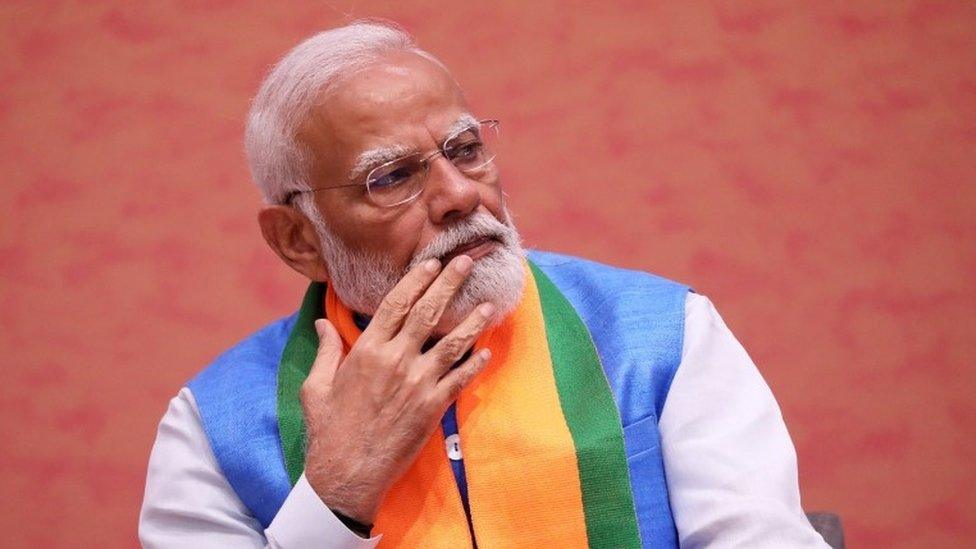
Narendra Modi, the 14th Prime Minister of India, has redefined the country’s political and economic landscape since assuming office in 2014. Representing the ancient and culturally significant constituency of Varanasi in Uttar Pradesh, he has led the Bharatiya Janata Party (BJP) to three consecutive Lok Sabha victories in 2014, 2019, and 2024. His leadership is characterized by an ambitious vision to transform India into a ‘Viksit Bharat’ (Developed India) by the centenary of its independence in 2047. This vision encompasses a holistic approach to national growth, combining high-tech modernization with deep-rooted cultural pride, aiming to position India as a global leader across economic, digital, and social dimensions.
Early Life and Formative Years
The journey of Narendra Modi began in the modest by-lanes of Vadnagar, a small town in Gujarat’s Mehsana district. Born on September 17, 1950, he was the first Prime Minister born in independent India, raised in a family of humble means where he balanced his early education with work at a family-owned tea stall. His formative years were deeply influenced by the spiritual and historical environment of Vadnagar and the works of Swami Vivekananda, which instilled in him a mission to restore India’s global stature. At age 17, he embarked on a two-year journey across India to explore its diverse cultures before returning to join the Rashtriya Swayamsevak Sangh (RSS) as a full-time Pracharak in 1972. This period of disciplined service and his involvement in the movement to restore democracy during the 1970s Emergency laid the foundation for his organizational and leadership skills.
Political Ascent
After years of organizational work within the BJP, Mr. Modi transitioned to executive governance in 2001 when he became the Chief Minister of Gujarat. Over his 13-year tenure (2001–2014), he led a strategic transformation of the state, focusing on industrial growth, infrastructure, and administrative efficiency. The “Gujarat Model” became a blueprint for development, showcasing how state-led initiatives could attract global investment and modernize public services. This success propelled him to the national stage as the BJP’s prime ministerial candidate for the 2014 elections, where he promised a shift from policy paralysis to decisive governance, eventually leading to a historic mandate that ended decades of coalition politics at the center.
Key Initiatives and Governance
Since 2014, the Modi administration has launched a series of flagship schemes aimed at structural reform and inclusive growth. ‘Make in India’ was introduced to transform the nation into a global manufacturing hub, while ‘Digital India’ has revolutionized public service delivery through technology. The ‘Swachh Bharat Mission’ addressed sanitation on a national scale, and the ‘Pradhan Mantri Jan Dhan Yojana’ facilitated unprecedented financial inclusion by opening nearly 32 crore bank accounts for the unbanked. In healthcare, ‘Ayushman Bharat’ created one of the world’s largest state-funded health insurance programs. Parallel to these social schemes, a massive infrastructure push saw the completion of long-neglected projects and the launch of modern marvels like the 340 km Poorvanchal Expressway and the 22 km Mumbai Trans Harbour Link, the world’s 12th longest sea bridge.
Vision for Future India
Looking toward 2047, the Prime Minister’s vision centers on self-reliance (Atmanirbhar Bharat) and global leadership. India’s Digital Public Infrastructure, anchored by the UPI ecosystem, has already positioned the country as a fintech innovator with record-breaking transaction volumes. The energy sector is undergoing a sustainable transformation, with India adding record solar and wind capacity—reaching 247.30 GW by 2025—to power its industrial journey. Furthermore, through initiatives like ‘Biopharma SHAKTI,’ the government aims to establish global leadership in advanced healthcare manufacturing and biologics by 2047. This future-ready strategy is designed to ensure that India not only grows but also sets global standards in technology, green energy, and innovation.
Leadership Style
Prime Minister Modi’s leadership style emphasizes ‘Cooperative Federalism,’ utilizing platforms like NITI Aayog to collaborate with state governments in achieving national goals. He often highlights that the resilience of India’s 1.4 billion citizens is the true driver of development. His governance model also focuses on youth empowerment through skill development and a vibrant startup ecosystem, which has seen the number of unicorn companies more than double since 2021. Additionally, his commitment to welfare is evident in targeted support for farmers through PM-KISAN and group farming initiatives to boost income, as well as schemes empowering artisans and women-led rural enterprises like the ‘Lakhpati Didi’ initiative.
Conclusion
Over the past decade, Narendra Modi has steered India onto a trajectory of rapid development and global relevance. From his humble beginnings to his role as a three-term Prime Minister, his journey reflects a tireless dedication to public service and a strategic vision for a modern, self-reliant nation. By bridging the gap between ancient spirituality and modern technology, his transformative leadership has prepared India for the challenges of the 21st century. As the country moves toward its ‘Amrit Kaal,’ his impact remains a defining force in the quest for a prosperous and developed ‘Viksit Bharat’.