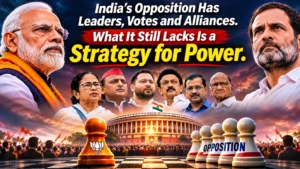
The battle for India’s next government may not be decided in Delhi. It could be shaped by a handful of states where political alliances, regional leaders, voter shifts and the battle for parliamentary seats will determine who enters the next power struggle with an advantage.
India’s next Lok Sabha election may still be years away, but the political battle has already begun.
National politics is often presented as a contest between two major political forces. But India’s electoral reality is far more complicated. A party can dominate the national narrative and still struggle in crucial states. An opposition alliance can appear weak nationally but become extremely competitive in individual regions. And a regional leader with control over a politically important state can suddenly become one of the most consequential figures in national politics.
The road to 2029 will not be decided equally across India’s political map.
Some states carry enormous parliamentary weight. Others are politically unpredictable. A few could become the battlegrounds where national momentum is won, lost or completely reshaped.
These are the 10 states that deserve the closest attention as India moves toward its next general election.
1. Uttar Pradesh — The State That Could Make or Break 2029
If there is one state where the political fortunes of national parties can change dramatically, it is Uttar Pradesh.
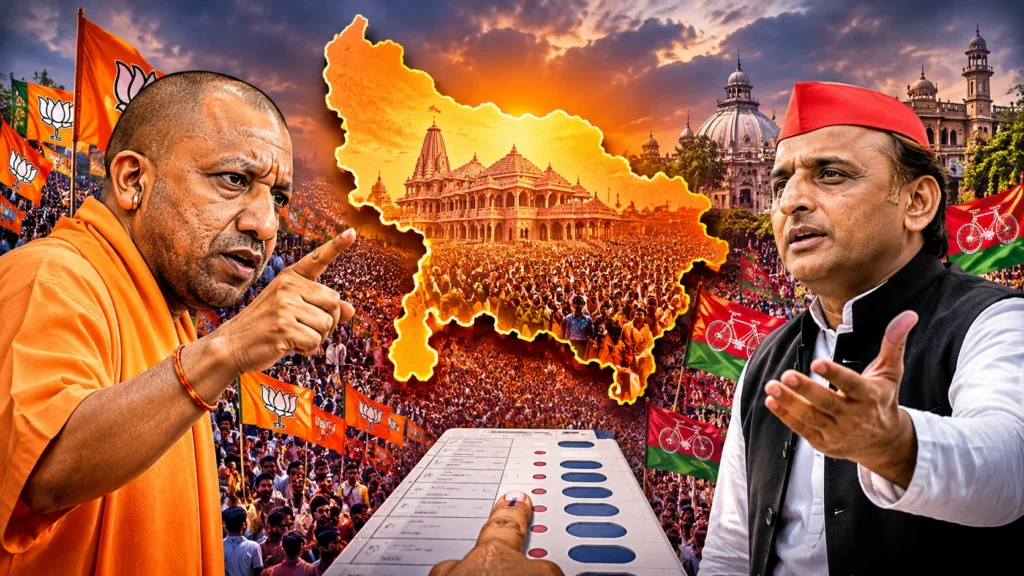
With 80 Lok Sabha seats, UP is not simply another state in India’s electoral calculations. It is a political battlefield where national ambitions, caste alliances, leadership credibility, welfare politics, religious identity and local organisation collide.
The 2024 Lok Sabha election delivered a major warning to the BJP. After dominating the state in 2019, the party saw its tally fall to 33 seats. The Samajwadi Party won 37 seats, while the Congress won six, significantly changing the political balance in the state.
The result exposed an uncomfortable reality for the BJP: even a formidable national political machine can face serious setbacks when its state-level electoral equation shifts.
The battle is bigger than BJP vs SP
The central question heading toward 2029 is whether the Samajwadi Party can turn its 2024 success into a durable political structure—or whether the BJP can rebuild the coalition that once made Uttar Pradesh its strongest electoral fortress.
For Akhilesh Yadav, the challenge is to sustain the alliance chemistry, maintain support among key voter groups, and convert parliamentary success into a longer-term political advantage.
For the BJP, the challenge is equally significant. Recovering lost ground will require more than national leadership and campaign machinery. The party must understand where voter dissatisfaction emerged and whether those factors can be corrected before the next general election.
The three questions that could define UP
-
Can the BJP rebuild its lost electoral ground?
-
Can Akhilesh Yadav maintain the opposition’s momentum?
-
Will caste arithmetic, welfare politics and local candidates reshape the contest again?
UP is not merely a state to watch. It is a potential national turning point.
Why it matters in 2029: A major shift in Uttar Pradesh could significantly change the national seat arithmetic and the political narrative around whoever is leading the country.
2. Maharashtra — Where Alliances Could Be More Important Than Individual Parties
48 Lok Sabha seats | The alliance battleground
Maharashtra may be one of the most complicated political battlegrounds in India.
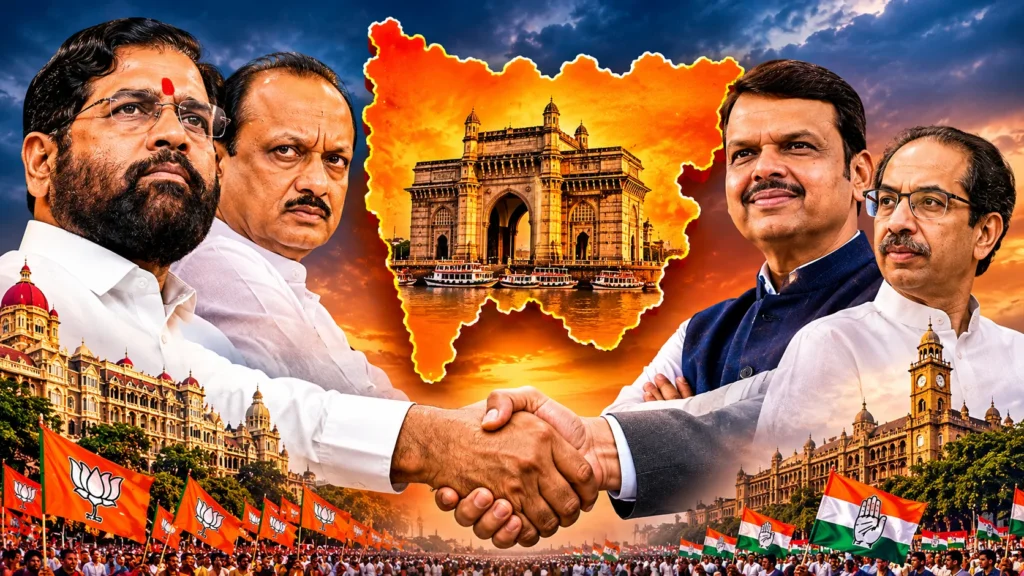
Few states have experienced such dramatic political realignments, party splits, leadership battles and alliance restructuring in recent years. The traditional political identities of several parties have been challenged, while voters have been forced to navigate competing factions claiming the same political legacy.
In 2024, the opposition INDIA alliance won 30 of Maharashtra’s 48 Lok Sabha seats, while the NDA won 17. The election demonstrated that alliance coordination and regional political identity could dramatically influence outcomes.
The real question: Who owns the political legacy?
Maharashtra’s politics is no longer simply about BJP versus Congress.
It involves competing factions of Shiv Sena and the Nationalist Congress Party, regional loyalties, leadership credibility and the ability of alliances to transfer votes.
A party may have a powerful leader. Another may possess the organisational machinery. A third may have a strong regional identity. But in a state where alliances can change the electoral equation, the ability to combine these strengths may be more important than individual party popularity.
What could change the equation?
-
Whether the rival factions can consolidate their respective voter bases.
-
Whether alliances remain united when seat-sharing negotiations begin.
-
Whether regional identity becomes a stronger electoral issue.
-
Whether urban and rural voting patterns move in different directions.
Maharashtra could become the state where political alliances are tested more severely than anywhere else.
The biggest winner in 2029 may not necessarily be the party with the strongest individual leader. It could be the alliance that makes the fewest strategic mistakes.
3. West Bengal — The Political Fortress That Will Always Be Under Pressure
42 Lok Sabha seats | Regional dominance versus national ambition
West Bengal has long been one of India’s most fascinating political battlegrounds.
The state has a political culture of intense competition, strong regional identities, organised political networks and elections that often become battles over much more than governance.
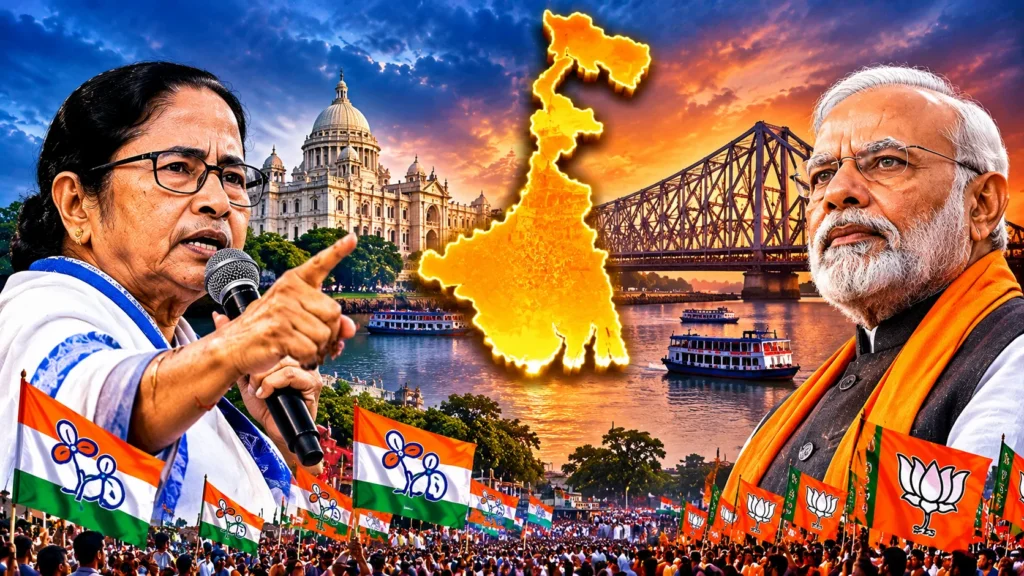
For the BJP, Bengal represents a major opportunity to expand its political footprint in eastern India. For regional forces, it represents the defence of a political identity that cannot easily be replicated by a national party.
In 2024, the Trinamool Congress won 29 seats, while the BJP won 12 and the Congress one.
Why Bengal matters beyond its 42 seats
Bengal could become a critical test of whether a national party can consistently challenge a powerful regional political machine.
The BJP’s strategy in the state faces a difficult question: can electoral momentum be converted into a sustainable state-level organisation capable of challenging the Trinamool across constituencies, not just during major elections?
Meanwhile, the Trinamool Congress must defend its political dominance while managing leadership continuity, local anti-incumbency and the challenge of keeping its support base consolidated.
The battle beneath the headlines
The contest is likely to revolve around:
-
Regional identity versus national political messaging
-
Welfare politics and voter loyalty
-
Local leadership and grassroots organisation
-
Anti-incumbency and political fatigue
-
The BJP’s ability to turn opposition votes into parliamentary victories
Bengal is not simply another electoral target.
It is a state where a breakthrough could reshape the political balance of eastern India—and where failure could expose the limits of a national expansion strategy.
4. Bihar — The State Where Political Loyalty Can Change Overnight
40 Lok Sabha seats | Coalition arithmetic and political survival
Bihar has a habit of making Indian politics unpredictable.
Its political landscape is shaped by caste coalitions, regional leadership, alliances that can change dramatically, grassroots organisation and political personalities who understand the importance of electoral arithmetic.
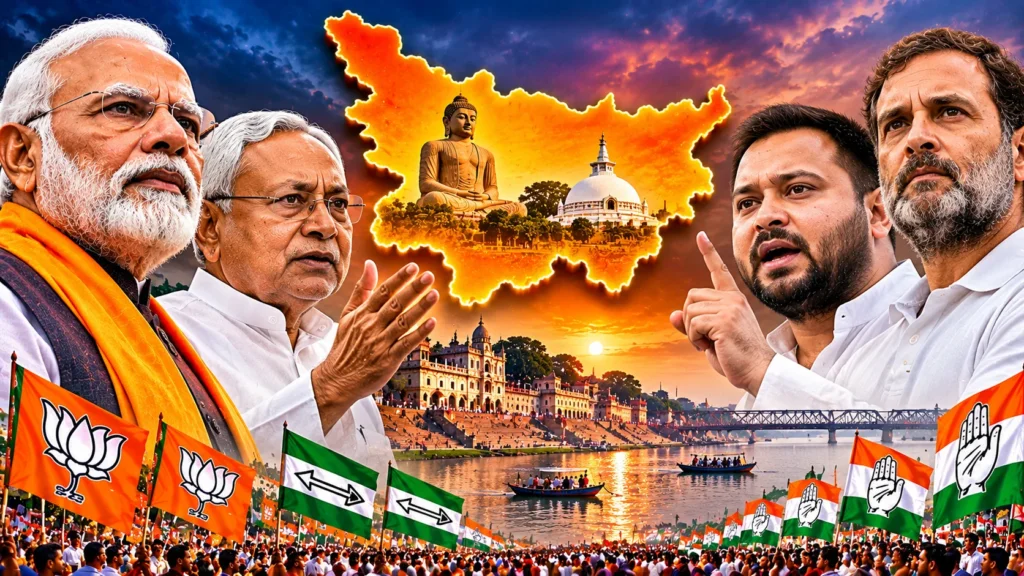
The state has 40 Lok Sabha seats, making it one of India’s most important electoral centres. In 2024, the NDA won 30 seats, while the INDIA bloc won nine.
But Bihar’s importance cannot be measured only by the number of seats won.
It is a state where political alliances can completely alter the balance of power. A leader who appears weakened can return to relevance through a new coalition. A dominant party can face unexpected pressure when voter combinations shift.
The battle for Bihar’s political future
The biggest question is whether Bihar’s political structure will continue to revolve around established power centres or whether a new generation of leadership can gradually reshape the state’s electoral landscape.
The BJP, JD(U), RJD, Congress and other political forces operate within a system where alliance mathematics can be just as important as individual party strength.
The next election will not simply be about who campaigns better.
It will be about who understands Bihar’s social and political combinations better.
Bihar could become the state where the difference between a comfortable national majority and a difficult coalition is decided.
5. Tamil Nadu — The Southern Wall National Politics Must Confront
39 Lok Sabha seats | Regional identity and national ambitions
Tamil Nadu presents a challenge that national political strategies cannot easily solve.
Its political identity has been shaped by Dravidian movements, language, regional pride, welfare politics and a political culture in which state-level leadership has historically mattered enormously.
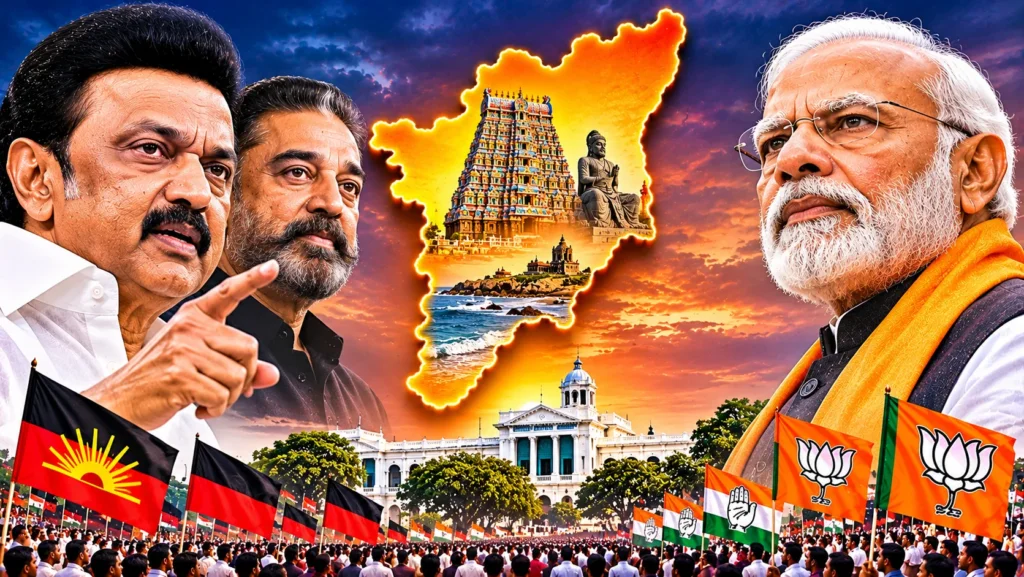
In the 2024 Lok Sabha election, the INDIA alliance swept all 39 seats in Tamil Nadu, demonstrating the strength of regional political coordination.
The state is important not only because of its 39 parliamentary seats but also because it represents a political environment where national political messaging may not automatically translate into electoral success.
Can national parties break through?
The central challenge for the BJP and other national parties is to establish a stronger local political identity without relying entirely on national leadership, national narratives or campaign visibility.
For regional parties, the challenge is different.
They must defend their established political space, manage leadership transitions, retain voter loyalty and prevent emerging rivals from turning dissatisfaction into a political breakthrough.
Why Tamil Nadu could become a national political story
Tamil Nadu could influence the 2029 election in three ways:
-
By maintaining the strength of regional political alliances.
-
By shaping the national opposition’s parliamentary numbers.
-
By demonstrating whether national parties can expand beyond their traditional political bases.
Tamil Nadu may not be the easiest state for a national party to conquer.
But it could be one of the most important states for the opposition to defend.
6. Karnataka — The Southern State That Could Swing the Balance
28 Lok Sabha seats | A major test of national and state-level political strength
Karnataka is one of the few southern states where national parties have a substantial political presence and where electoral competition can directly influence the national seat balance.
Its 28 Lok Sabha seats make it strategically important for both the BJP and Congress.
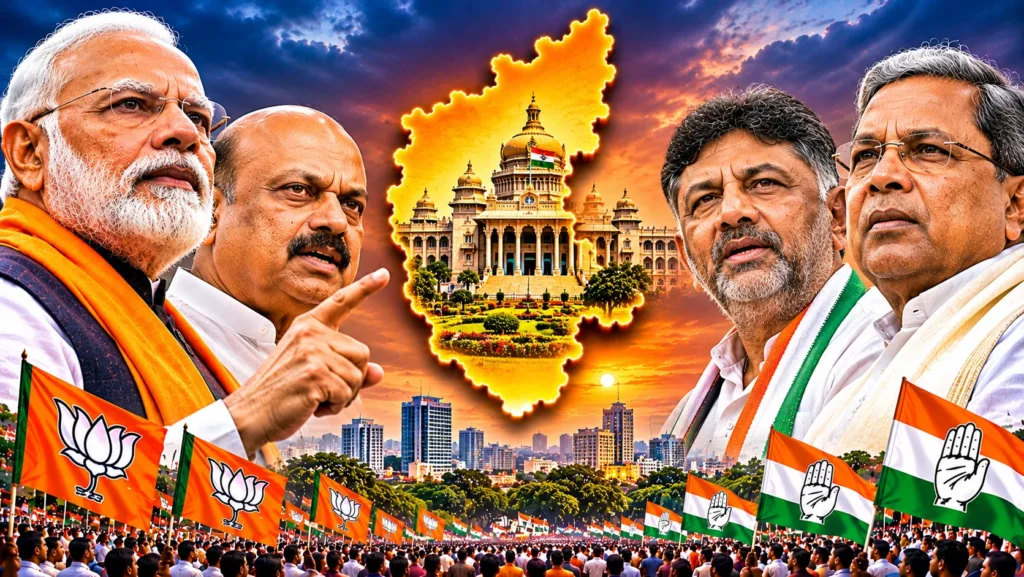
In 2024, the NDA won 19 seats in Karnataka, while the INDIA bloc won nine.
That result showed that the state remains competitive even when one political alliance has advantages in organisation and voter mobilisation.
The political battle is far from settled
Karnataka’s political equation is influenced by several overlapping factors:
-
BJP’s established support base
-
Congress’s state-level organisational strength
-
Regional influence and the role of JD(S)
-
Urban voter sentiment in Bengaluru
-
Rural issues, agriculture and welfare politics
-
Leadership and factional dynamics
A shift in even a relatively small number of constituencies could matter significantly in a closely contested national election.
The question nobody can ignore
Can Congress translate its state-level governing position into a stronger Lok Sabha performance?
Or can the BJP-led alliance rebuild enough momentum to strengthen its position across Karnataka?
Karnataka could become a state where political momentum, governance perception and alliance strategy collide.
7. Rajasthan — The Political Swing That Could Surprise Everyone
25 Lok Sabha seats | Political momentum and voter fatigue
Rajasthan is often treated as a state where political power moves between competing parties.
But that assumption can be dangerous.
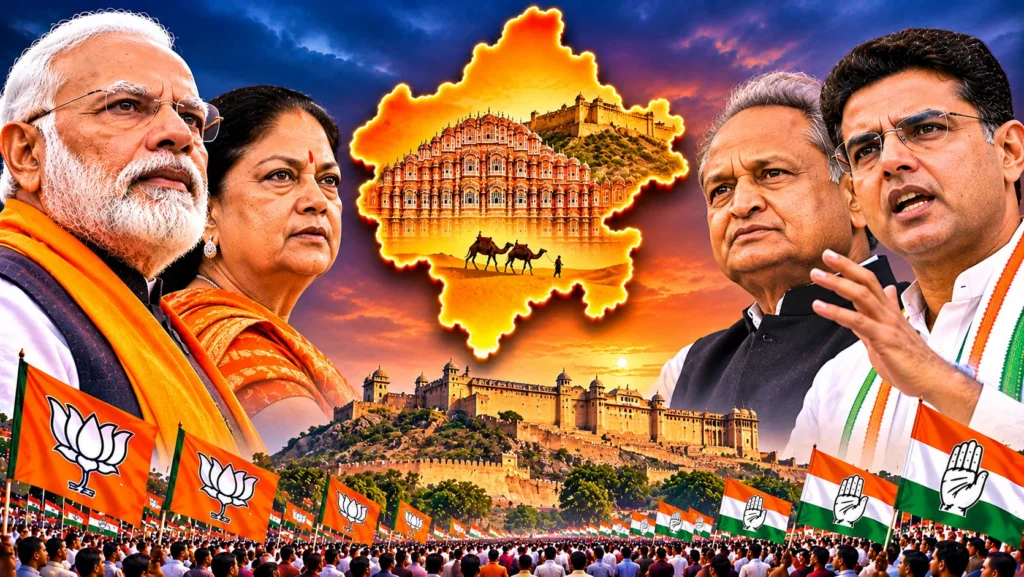
The state has 25 Lok Sabha seats, and its electoral results can influence the wider narrative of political momentum across northern India.
In 2024, the BJP won 14 seats in Rajasthan, while the INDIA bloc won 11. This was a significant change from the BJP’s stronger performance in 2019.
Why Rajasthan deserves attention
Rajasthan’s political contest is often shaped by leadership perception, local candidate selection, rural sentiment, caste equations, farmer concerns and the performance of the government in power.
A party may dominate headlines but struggle with constituency-level dissatisfaction. Another may appear weaker nationally but benefit from local issues and anti-incumbency.
That makes Rajasthan particularly important for understanding whether a national political wave is real—or whether it is simply a collection of state-level results.
The potential wildcard
If the BJP manages to rebuild its lost ground, Rajasthan could strengthen the national ruling alliance.
If the opposition retains or expands its gains, the state could become a sign that electoral challenges are spreading beyond isolated regions.
Rajasthan could be the kind of state where neither side should assume victory before the campaign even begins.
8. Gujarat — The BJP’s Stronghold, but Can It Remain Untouchable?
26 Lok Sabha seats | A test of political dominance
Gujarat has long been one of the BJP’s most important political strongholds.
The state is more than an electoral territory. It is closely connected to the party’s political identity, leadership narrative, organisational strength and national ambitions.
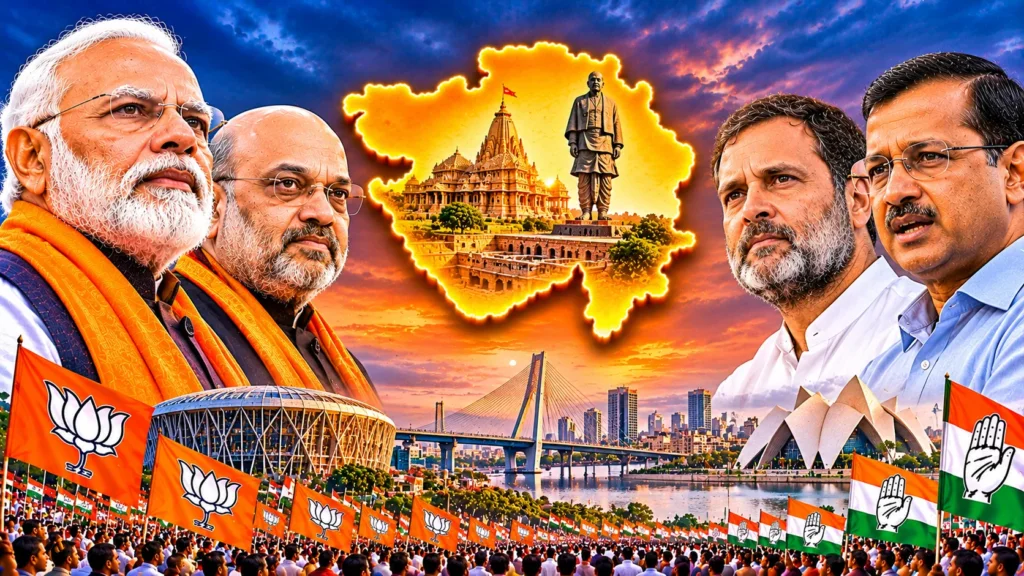
In 2024, the BJP won 25 of Gujarat’s 26 Lok Sabha seats. The Congress secured one seat.
On the surface, Gujarat may appear to be one of the least unpredictable states heading into 2029.
But that is precisely why it deserves attention.
What happens when a stronghold is taken for granted?
The political challenge for a dominant party is often not defeating its opponent.
It is maintaining enthusiasm among its own voters, preventing complacency, managing local dissatisfaction and keeping its organisational machinery active when electoral competition appears limited.
The opposition, meanwhile, faces a much more difficult task. It must find ways to create competitive constituencies, build local credibility and convert political dissatisfaction into actual votes.
The bigger question
Can Gujarat continue to deliver near-total parliamentary dominance for the BJP?
Or could even a small electoral shift become politically significant by changing the national narrative about the party’s strongest regions?
Gujarat may not be the most competitive state in 2029.
But if the political equation changes here, the symbolism could be far bigger than the number of seats lost or gained.
9. Odisha — The New Political Power Centre That Could Become Even More Important
21 Lok Sabha seats | A changing political landscape
Odisha represents one of India’s most important political transitions.
For years, the state’s political landscape was shaped by the dominance of the Biju Janata Dal. But the 2024 elections changed the state’s political equation dramatically, with the BJP emerging as the dominant force in both the state assembly and Lok Sabha contests.
The BJP won 20 of Odisha’s 21 Lok Sabha seats in 2024.
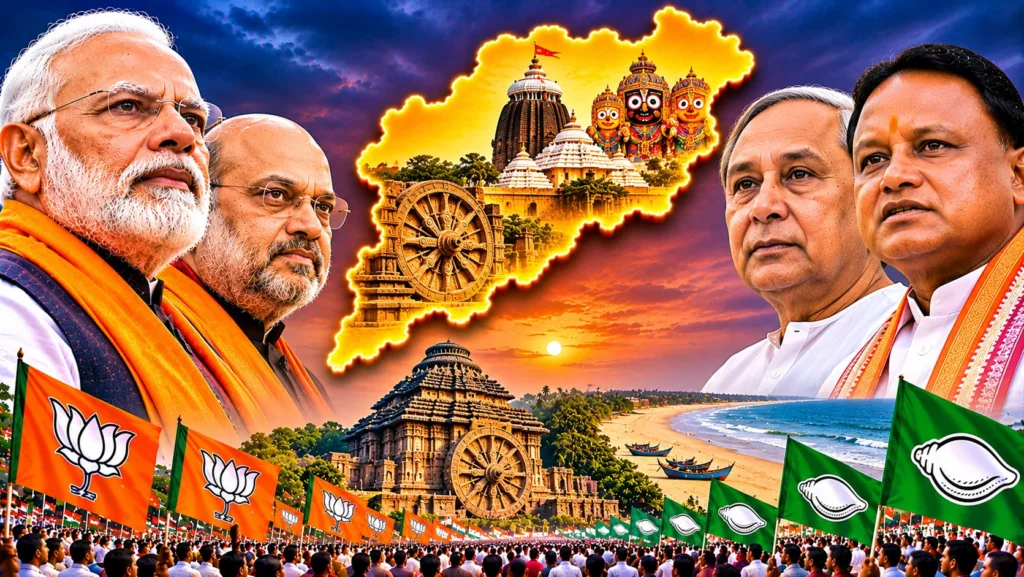
The shift was not just an electoral victory.
It was a major change in the state’s political power structure.
The real test begins after the breakthrough
Winning power is one challenge.
Maintaining dominance is another.
The BJP now faces the challenge of building a deeper state-level political structure, sustaining voter expectations and managing the transition from challenger to governing force.
The BJD, meanwhile, faces a critical question: can a party that dominated Odisha for years rebuild its political relevance and create a credible path back to power?
Why Odisha could matter in 2029
Odisha could become a crucial state for the BJP’s eastern strategy.
If the party consolidates its position, it may strengthen its national electoral base. If the opposition begins to recover, Odisha could become a test of whether a dramatic political shift can be reversed.
The most interesting political story in Odisha may not be who won in 2024—but who manages to control the state five years after that historic change.
10. Telangana — The State Where Every Political Force Has Something to Prove
17 Lok Sabha seats | A three-way political contest
Telangana may not have the parliamentary weight of Uttar Pradesh or Maharashtra.
But it could become one of the most strategically interesting states in southern India.
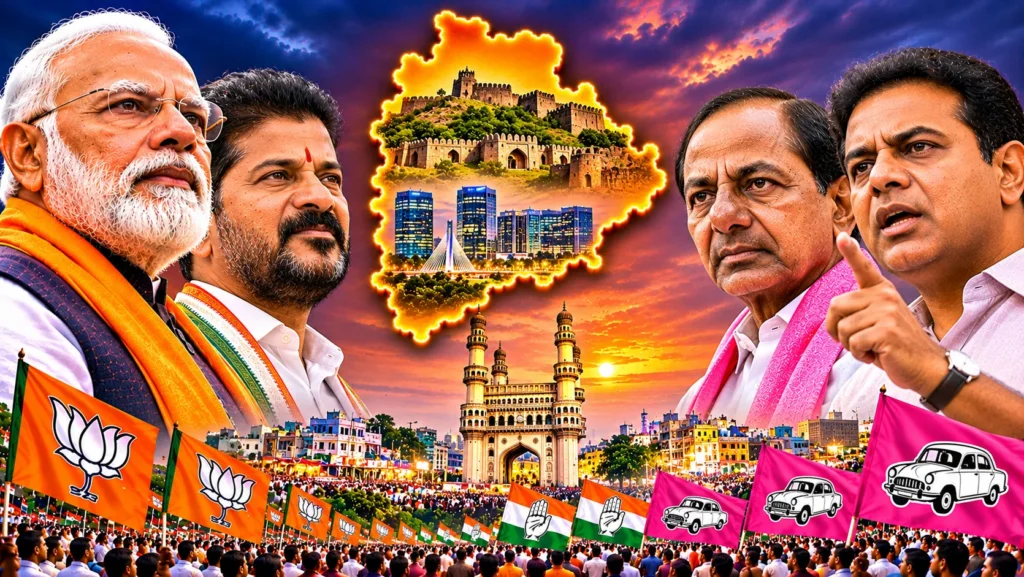
The state’s political landscape is shaped by competition among Congress, BJP and BRS, with each party trying to establish a position that extends beyond immediate electoral gains.
In the 2024 Lok Sabha election, the NDA won eight seats, the INDIA bloc won eight, and other candidates won one.
That near-even division created a state where political competition remains particularly important.
Three parties. Three ambitions. One political battleground.
For Congress, the challenge is to strengthen its position after winning state power and convert governance into sustained parliamentary support.
For BJP, Telangana represents a potential growth opportunity in southern India.
For BRS, the challenge is to rebuild its political position after losing state power and establish that its influence remains relevant.
Why Telangana could surprise in 2029
Unlike states where the electoral contest is largely defined by two dominant parties, Telangana’s political competition could evolve depending on leadership, voter dissatisfaction, local alliances and the performance of the governing party.
A shift of only a few seats could have national significance in a close Lok Sabha contest.
Telangana may not receive the same attention as Uttar Pradesh or Maharashtra.
But it could be one of the states where the political balance changes more quickly than expected.
The Bigger Picture — 10 States, 364 Seats, and a National Battle
Together, these 10 states account for 364 of India’s 543 Lok Sabha seats—roughly two-thirds of the elected House.
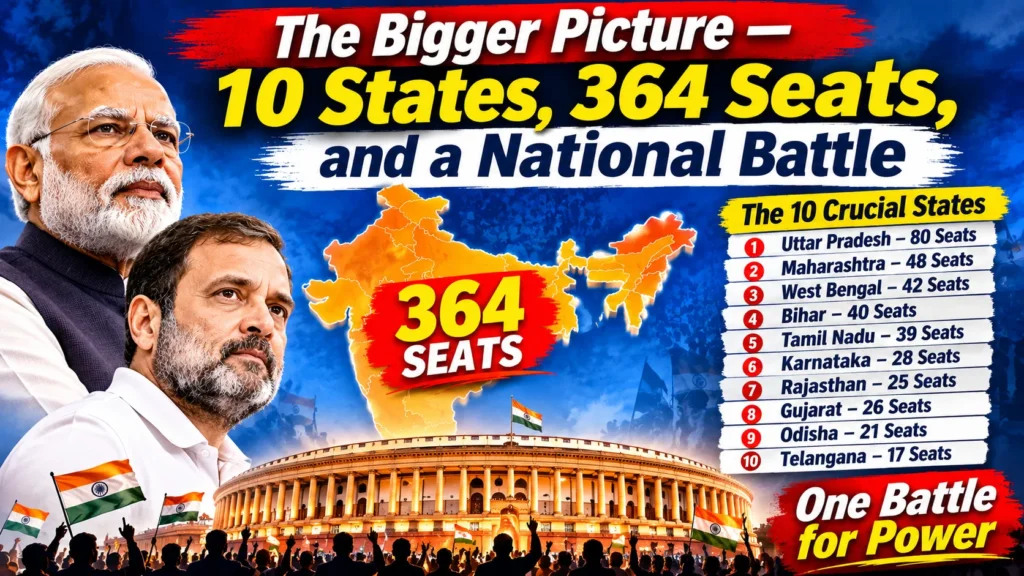
Seat totals based on the current Lok Sabha allocation across states.
| State | Seats | Key political question |
|---|---|---|
| Uttar Pradesh | 80 | Can the BJP recover, or can SP maintain its momentum? |
| Maharashtra | 48 | Which alliance can convert its combined strength into seats? |
| West Bengal | 42 | Can national politics challenge regional dominance? |
| Bihar | 40 | Who can build the winning political coalition? |
| Tamil Nadu | 39 | Can national parties break through regional political barriers? |
| Karnataka | 28 | Can either major alliance expand its parliamentary advantage? |
| Rajasthan | 25 | Will voter sentiment create another major electoral shift? |
| Gujarat | 26 | Can the BJP maintain its overwhelming dominance? |
| Odisha | 21 | Can the BJP consolidate its new political position? |
| Telangana | 17 | Which of the three major political forces will gain momentum? |
These states are not equally competitive. Some are strongholds. Some are battlegrounds. Others are politically unpredictable.
But together, they form a significant part of the electoral map that any national party must understand if it wants to build a path to power in 2029.
The mathematics is simple.
A party that performs strongly in these states can create a substantial parliamentary advantage. A party that loses ground across several of them may find that its national popularity is no longer enough.
The real battle, however, will not be fought only between parties.
It will be fought between political strategies.
One side may focus on national leadership, infrastructure, welfare delivery and a consolidated voter base.
The other may attempt to build a coalition of regional forces, local leadership, social alliances and voter dissatisfaction.
The outcome will depend on which strategy can survive the reality of India’s diverse political landscape.
The 2029 Wildcard: The States Nobody Can Fully Predict
The most dangerous assumption any political party can make before a general election is that its previous victories will automatically repeat.
India’s elections have repeatedly demonstrated that political dominance is not permanent.
Alliances change. Voters change priorities. Leaders lose credibility. New political narratives emerge. Regional issues become national issues. And constituencies that appear secure can become unexpectedly competitive.
The biggest wildcard heading toward 2029 may not be a single leader or party.
It could be the accumulation of smaller political shifts across multiple states.
A few seats lost in Uttar Pradesh. A difficult alliance negotiation in Maharashtra. A regional party holding its ground in Bengal. A political recovery in Bihar. A shift in Karnataka. A breakthrough in Telangana.
Individually, these developments may appear limited.
Together, they could change the balance of power in Delhi.
Final Verdict: The Road to Delhi Will Be Decided Across India
The next Lok Sabha election will be presented as a national contest.
But the real story could unfold state by state, constituency by constituency, alliance by alliance.
Uttar Pradesh will test national leadership and opposition strength.
Maharashtra will test alliance arithmetic.
West Bengal will test the battle between regional dominance and national expansion.
Bihar will test political coalitions.
Tamil Nadu will test the limits of national political influence.
Karnataka will test the balance between state and national momentum.
Rajasthan will test whether political dominance can survive changing voter sentiment.
Gujarat will test the strength of a political fortress.
Odisha will test whether a major political transition can become permanent.
Telangana will test whether a competitive political landscape can produce a new national advantage.
There may be no single state that decides India’s next government.
But there could be a handful of states where the political equation changes—and everything else follows.
The central question heading into 2029
Will India’s next government be decided by the strength of national leadership—or by the states where political power is shifting beneath the surface?
The answer may determine who rules Delhi after 2029.
And the battle for that answer has already begun.