
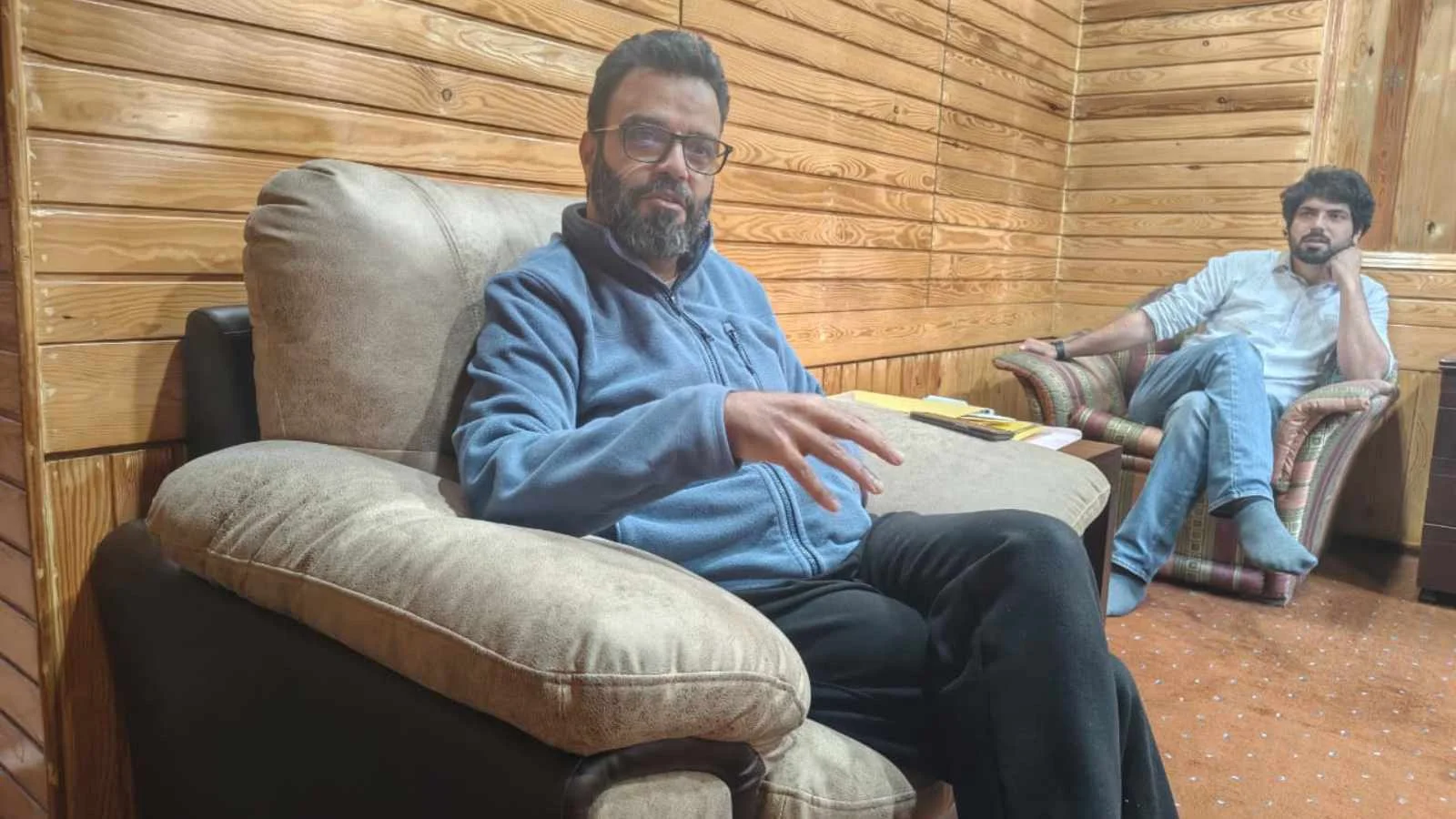
Following a significant political departure, prominent leader Ruhullah Mehdi addressed his exit in a recent interview, launching sharp criticism against senior National Conference figure Omar Abdullah. Mehdi accused the leadership of aligning with ruling party rhetoric and favoring political submission over genuine reconciliation, sparking widespread discussion within regional political circles.
Political Tensions Surface Following High-Profile Exit
The political landscape in the region witnessed fresh turbulence as Ruhullah Mehdi stepped forward to discuss the underlying reasons for his departure from the National Conference. In a candid interview, Mehdi articulated profound policy and ideological disagreements with the party leadership, focusing heavily on the approach taken toward central authorities.
Mehdi’s remarks centered on senior leader Omar Abdullah, whom he accused of speaking the language of the Bharatiya Janata Party (BJP). According to Mehdi, the prevailing strategy within the party leadership has pivoted away from constructive resistance and reconciliation toward an ethos of political submission, which he found fundamentally unacceptable.
Ideological Divergence Within Regional Politics
The friction highlights deep-seated ideological fractures concerning how regional parties should navigate relations with the national government. Critics of the current leadership argue that a more assertive stance is required to safeguard local interests and democratic norms, while proponents of engagement suggest pragmatic cooperation is necessary to deliver governance.
Political analysts note that Mehdi’s outspoken stance could galvanize a distinct faction of voters and party cadres who feel alienated by moderate approaches. As political alignments continue to shift, statements from departing leaders often signal broader recalibrations within opposition ranks ahead of upcoming electoral battles.
Implications for the National Conference
The departure and subsequent public critique present a distinct communication and political challenge for the National Conference. Managing internal dissent while maintaining a unified front against political rivals remains a delicate balancing act for the party leadership. Observers will be closely monitoring how the party responds to these allegations and whether further internal realignments materialize in the near future.