
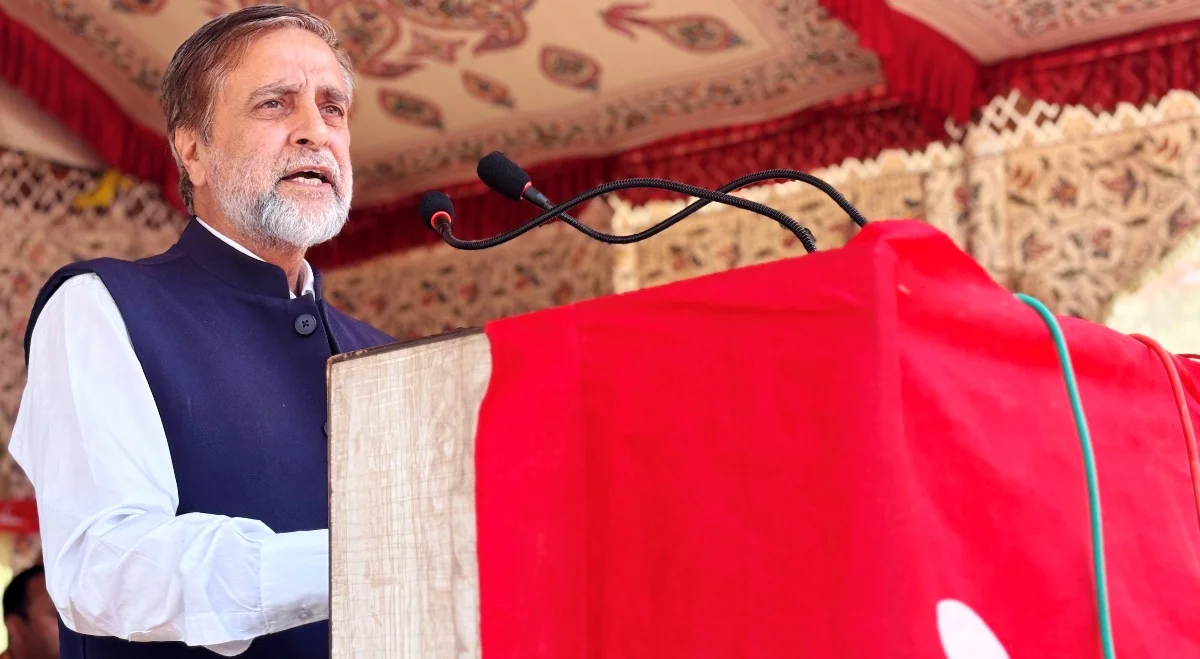
Mian Altaf Ahmad stands as one of the most influential political and spiritual figures in the Union Territory of Jammu & Kashmir. Belonging to a revered lineage of Sufi leaders from Wangath, Kangan, Ahmad has seamlessly transitioned traditional religious authority into a powerful instrument of democratic representation, grassroots advocacy, and legislative governance under the banner of the Jammu & Kashmir National Conference.
Background & Political Context
The political trajectory of Mian Altaf Ahmad is deeply intertwined with the socio-religious fabric of Jammu & Kashmir, particularly within the Gujjar and Bakerwal communities. Hailing from a distinguished family of spiritual leaders based in Wangath, Kangan, his lineage has historically commanded immense reverence across the Pir Panjal range and the Kashmir Valley. This unique position allowed his family to function not merely as religious guides, but as traditional arbiters of community disputes, social welfare advocates, and cultural pillars.
Historically, this spiritual capital translated into significant electoral influence. Mian Altaf Ahmad stepped into the political arena to institutionalize this community trust through formal democratic channels. Over successive electoral cycles, he established himself as a formidable grassroots leader, winning multiple assembly elections from the Kangan constituency and serving in various ministerial capacities within successive state governments. His political genesis reflects a broader pattern in Indian democracy where traditional authority structures evolve into modern representative mandates, anchoring marginalized pastoralist communities into the mainstream legislative process.
Core Developments & Key Positions
As a senior leader of the Jammu & Kashmir National Conference (JKNC), Mian Altaf Ahmad has consistently championed the rights, socio-economic upliftment, and political empowerment of marginalized communities, particularly Scheduled Tribes (STs) in the region. His recent electoral victories underscore his enduring mass appeal and organizational capability amidst a rapidly shifting political landscape following the abrogation of Article 370 and the subsequent reorganization of the erstwhile state into a Union Territory.
In his legislative and public pronouncements, Ahmad has maintained a steadfast focus on inclusive development, ecological preservation of forested regions inhabited by nomadic tribes, and the safeguarding of traditional land and livelihood rights. Party leadership under figures like Farooq Abdullah and Omar Abdullah has frequently relied on his deep regional connect to consolidate support bases in rural and semi-urban constituencies, ensuring that the National Conference retains its footing as a pan-J&K secular political force.
Opposition Counter-Perspectives & Public Debate
While Mian Altaf Ahmad enjoys widespread popularity and respect across communal lines, his political positions and those of his party are subject to rigorous public debate and opposition scrutiny. Rival political formations, including the Bharatiya Janata Party (BJP) and various regional upstarts, often critique the traditional dynastic and regional power structures represented by veteran leaders like Ahmad, arguing for a more decentralized and merit-based political culture.
Furthermore, debates frequently emerge surrounding the efficacy of reservation policies and welfare delivery for nomadic communities. Critics from opposing political spectrums contend that despite long-standing representation by leaders of traditional stature, structural challenges such as seasonal migration hardships, inadequate healthcare access in high-altitude pastures, and educational backwardness require more innovative governance models rather than relying purely on traditional political patronage networks.
Electoral & Strategic Ramifications
The electoral footprint of Mian Altaf Ahmad extends far beyond his immediate home constituency of Kangan. Given his stature among the Gujjar and Bakerwal populations—who constitute a significant voting bloc across several districts of both the Kashmir and Jammu divisions—his campaigning and strategic alignment carry profound weight for overall alliance arithmetic.
In the context of the restored legislative assembly in Jammu & Kashmir, leaders of Ahmad’s caliber are vital for coalition stability and legislative consensus-building. His ability to bridge urban political discourse in Srinagar with the urgent rural grievances of pastoralist communities makes him a linchpin in the National Conference’s electoral strategy, directly influencing seat conversion rates in mixed demographic zones.
Policy Impact & Governance Implications
The integration of traditional community leaders into modern legislative frameworks holds significant implications for public policy and administration in Jammu & Kashmir. Ahmad’s advocacy has consistently pushed administrative machinery to address the ground-level realities of forest-dwellers, transhumant communities, and economically vulnerable rural populations.
Governance implications are visible in policy adjustments regarding transit facilities during seasonal migrations, forest rights act implementations, and targeted developmental funding for remote mountainous pockets. His emphasis on participatory governance ensures that marginalized voices are articulated within administrative corridors, influencing budgetary priorities and welfare allocation.
Strategic Outlook
Looking ahead, the role of Mian Altaf Ahmad in Jammu & Kashmir’s political evolution will remain pivotal. As the Union Territory navigates the complexities of restored statehood demands, administrative oversight, and developmental imperatives, seasoned leaders who command cross-regional and cross-communal respect are indispensable.
For the National Conference, leveraging his moral authority and administrative experience will be critical in addressing public disillusionment and steering legislative business effectively. As policy debates shift toward employment, resource management, and regional autonomy, figures like Ahmad will serve as vital anchors maintaining the delicate balance between democratic institutions and traditional societal trust.